Composesoral Association Vorțana
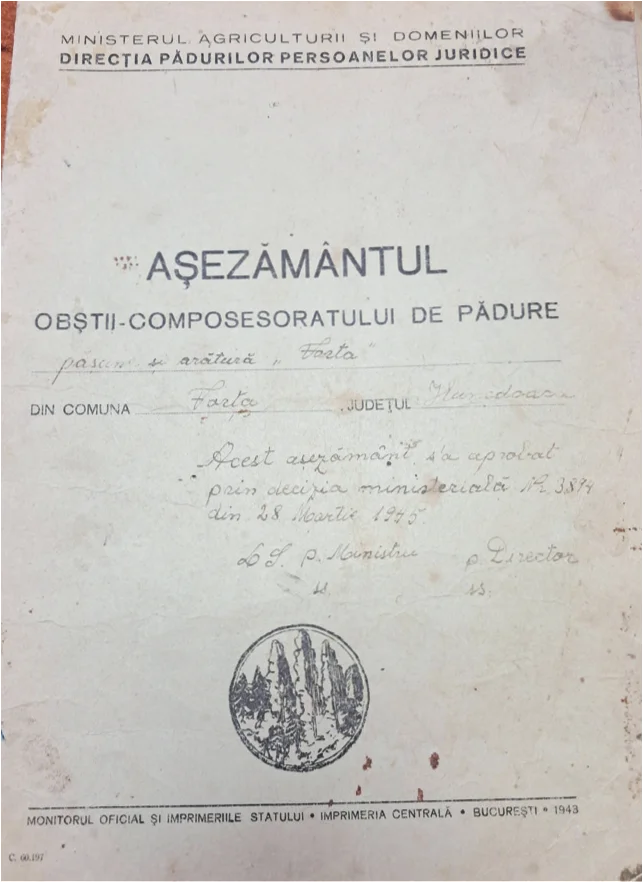
The “VORȚANA” Composesoral Association (Community Forest Association) from Vorța, no. 57, is an institution with roots deeply embedded in the history of the local community and in the tradition of old forms of common ownership in Romania. Although its contemporary form was (re)established in the year 2000, based on Law no. 1/2000, the composesorat has a much older history, with its last old statute dating back to 1945, and its origins documented before the year 1900. Through its historic character, the “VORȚANA” Composesoral Association is considered part of Romania’s historical treasury, in accordance with the provisions of the Forestry Code, being known in the past as the composesorat of the “former iodagi” (serfs/tenants) of the village of Vorța (Vorcza).
Structure and Heritage of the Association
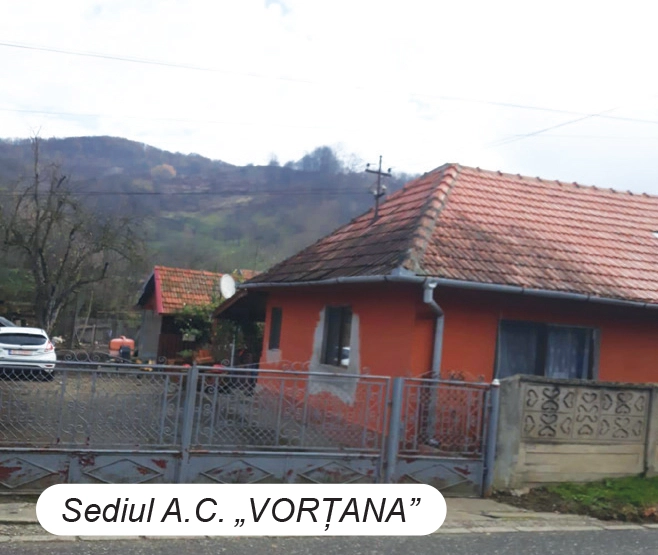
Today, the wealth of the “VORȚANA” Composesoral Association is divided into 116 undivided shares, held by 79 titleholders and heirs, thus preserving the tradition of transmitting property rights within the community. The association’s main headquarters is located in the village of Vorța at no. 57, a building made available through the goodwill of Mr. Crăciun Octavian, vice-president of A.C. “VORȚANA” and the first, as well as the oldest, (re)founding member of the association in the year 2000. At the time of its modern reorganization, the composesorat managed a heritage of 208 hectares of land, of which 157.43 hectares were forest with property titles, and the rest represented other types of land that had not yet been individually attributed.
Structure of the Forest Fund
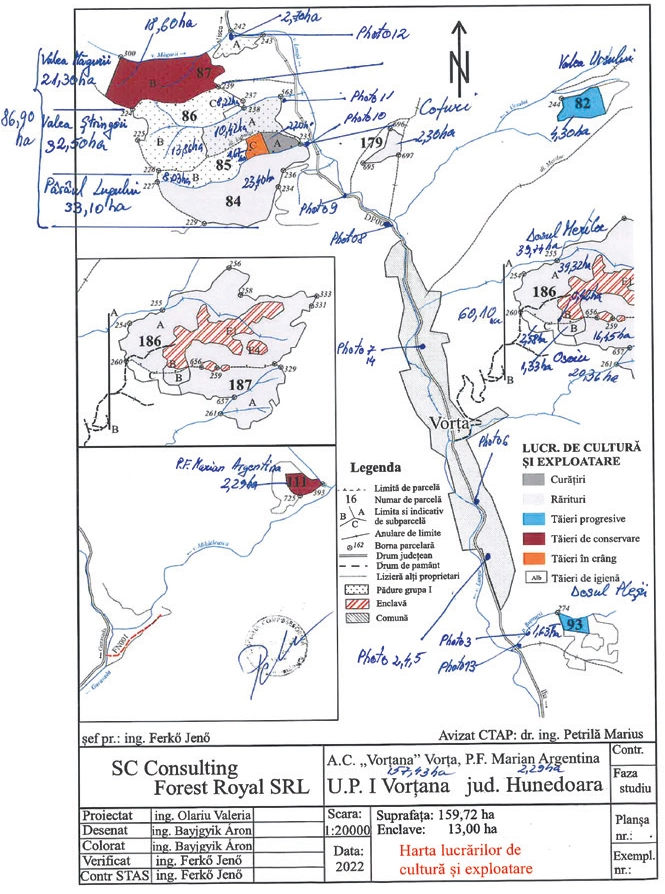
The forest area of 157.43 ha is divided into five distinct bodies of forest, as follows:
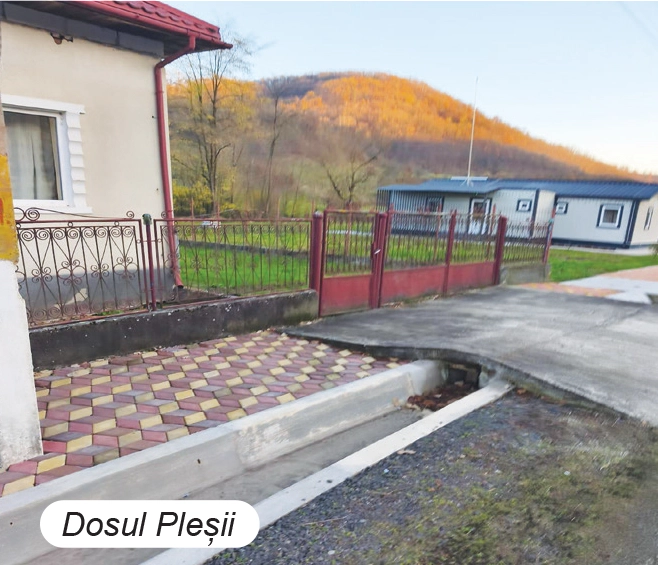
- Dosul Pleșii - Management Unit (UA) 93% - 1.63 ha
- Osoiul - Dosul Merilor - 60.10 ha
- Valea Ursului - UA 82% - 4.30 ha
- Cofuri - UA 179 - 2.3 ha
- Pârâul Lupului + Valea Stringoii + Valea Măgurii - UA 84, 85 ABC, 86 ABC, 87 AB - 86.90 ha
These bodies of forest represent not only an economic resource but also a natural and cultural heritage of great value for the community of Vorța, preserved and managed in the spirit of the composesoral tradition.
“However, considering that functions regarding carbon sequestration and oxygen production, as well as other functions of the forest (preservation of diversity, etc.), are not yet economically quantified, the future of A.C. ‘VORȚANA’ for the next quarter of a century is not promising. According to the current forest management plan (2022-2031), 41% are non-productive forests and 59% are forests with low economic productivity. Thus, the optimal sustainability of A.C. ‘VORȚANA’ is uncertain for the next 2-3 decades; meaning the production of main and secondary products, which have a relative economic value of 266 cubic meters/year (100%) at present (2022-2031), will decrease to 212 cubic meters/year (-20%) for the period 2032-2041, and to 195 cubic meters/year (-27%) for the period 2042-2051. Only later, after the year 2051, under optimal conditions, will it be possible to harvest 460 cubic meters/year (+173%)!” declared Natanael Petrescu, the project representative.
The European SMURF project represents a large-scale strategic endeavor dedicated to supporting small forest owners in the European Union, a category that has faced structural, administrative, and economic difficulties for decades. In Europe, socioeconomic changes regarding forest ownership—amplified by population migration, urbanization, intensification of agriculture, and the increasingly severe impact of climate change—have generated a difficult context: land abandonment, accentuated fragmentation of properties, forest degradation, loss of natural habitat, and the diminution of essential ecosystem services, such as wood production, carbon sequestration, biodiversity conservation, or recreation. Under these conditions, small forestry holdings, whose real size remains largely unknown (the number of owners potentially exceeding 20 million in Europe), face fundamental barriers: lack of an updated forestry cadastre, incomplete or unclear property titles, difficulties in association, and the lack of a modern management framework comparable to that in the agricultural sector. Although Europe has implemented coherent policies for the modernization of agricultural holdings, the forestry sector—especially the private one—has lagged behind, and small units are the least documented and supported.
To respond to these problems, the SMURF project - Small Forest Owners Empowerment, funded through the Horizon Europe program, offers initial funding of up to 200,000 euros for 40 associations, consortia, federations, or cooperatives of small forest owners in the EU. The goal is to encourage the modernization, professionalization, and connection of these structures to European networks of knowledge and innovative practices in silviculture. SMURF aims to collect real data from the field, to capture the diversity of forest ownership models in Europe, to promote the involvement of owners in consultation processes, and to strengthen their representation at the European level. In convergence with the European Forest Strategy and the multifunctional principles of modern silviculture—which integrate biodiversity protection, adaptation to climate change, maintenance of ecosystem services, and the owner’s right to decide upon their forest—SMURF supports the implementation of real and applicable solutions at the local scale. The endeavor is consolidated by the Forest Europe Ministerial Declaration in Bonn (2024), which reaffirms the freedom and responsibility of forest owners in choosing management systems. By winning this project, the “VORȚANA” Composesoral Association enters a modern European framework dedicated to small forest owners. In this way, the association becomes part of an ample process of digitalization, professionalization, and revitalization of traditional forestry holdings in Romania. Its participation confirms the value of the composesorat as a community and historical structure, capable of adapting to the demands of the present and actively contributing to the protection of forests, the sustainable development of the village of Vorța, and the integration of good European practices in forest land management.
The SMURF project defends the forest owner’s right to decide on the objectives and management systems to be applied in their forest and the recent Ministerial Declaration from Bonn, signed by Forest Europe on 02/10/2024.